 listicle
Best Financial Planning Software for Legacy in 2026
Table of Contents
- What Legacy-Focused Financial Planning Software Should Do
- Quick Comparison: Best Financial Planning Software for Legacy
- Top Picks for Estate Planning Software for Families
- Tax-Efficient Legacy Strategies: Software That Finds the Savings
- Financial Planning for Multi-Generational Wealth: Tools That Scale
- How to Evaluate Legacy Planning Software: A Decision Framework
- Conclusion
- Frequently Asked Questions
Last Updated: September 26, 2026

What Legacy-Focused Financial Planning Software Should Do
Financial planning software for legacy is built to do one job that budgeting apps cannot: move wealth from one generation to the next without losing it to taxes, poor sequencing, or disorganization. At Gorra Financial Group, we see this gap constantly. Clients arrive with a solid budget app and a vague plan to "figure out the estate stuff later."

Core Capabilities That Separate Legacy Tools From Budgeting Apps
The line between a budgeting app and a legacy planning tool comes down to scope. A budgeting app tracks what you spend. A legacy tool models what you leave behind.
Look for these capabilities before you compare products:
- Estate and beneficiary mapping tied to account-level data
- Tax projection across multiple years, not just the current one
- Withdrawal sequencing that accounts for required distributions
- Multi-user access so spouses, adult children, and advisors see the same plan
- A client portal for documents, statements, and account aggregation
Quick Comparison: Best Financial Planning Software for Legacy
Before comparing tools, settle one question that trips up most buyers: which kind of "legacy" are you solving for?

- Legacy as estate and inheritance planning, software that models wealth transfer, beneficiary mapping, tax sequencing, and multi-generational visibility.
- Legacy as outdated technology, the older on-premise systems some firms still run, and the migration path off them.
Feature and Fit Comparison
Tool | Best For | Standout Legacy Feature | Deployment | Pricing Transparency |
|---|---|---|---|---|
Gorra Financial Group | Families wanting a guided, human-backed plan | In-house CPA, accounting services, bilingual English/Spanish support, access to 100+ carriers and investment companies | Advisor-guided service | Contact for details |
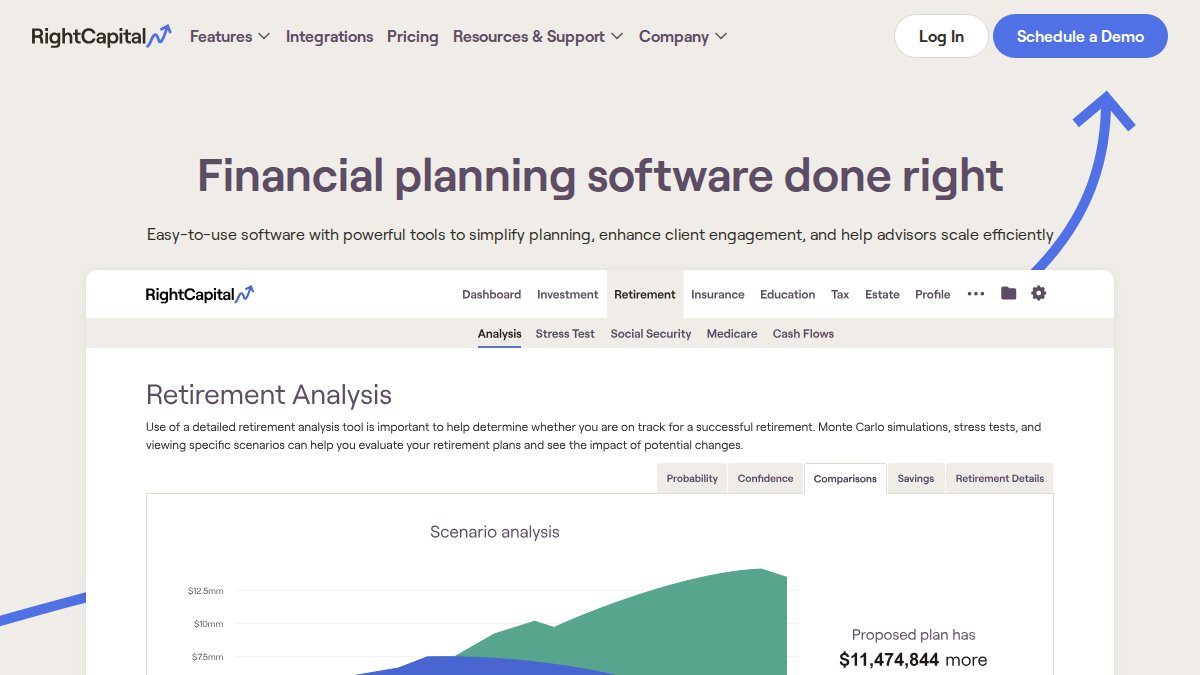
RightCapital | Advisors needing visual estate modeling | Interactive estate and retirement visuals | Cloud-based | Not published publicly |
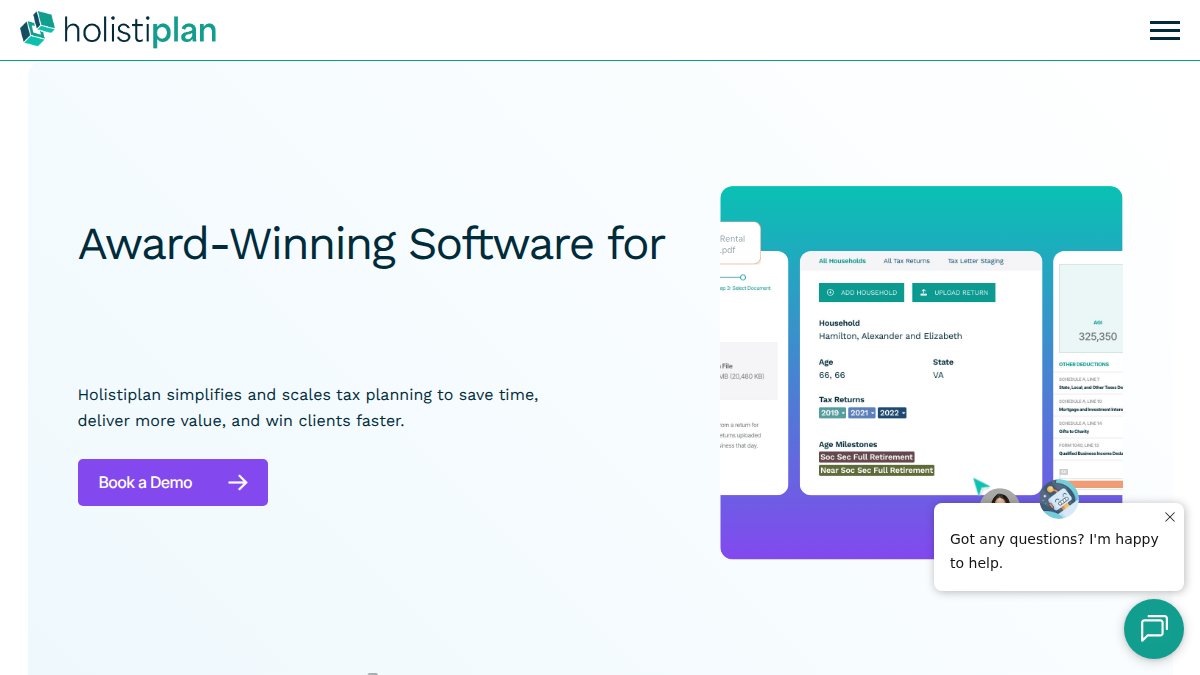
Holistiplan | Tax-focused advisors | Automated tax return analysis | Cloud-based | Not published publicly |
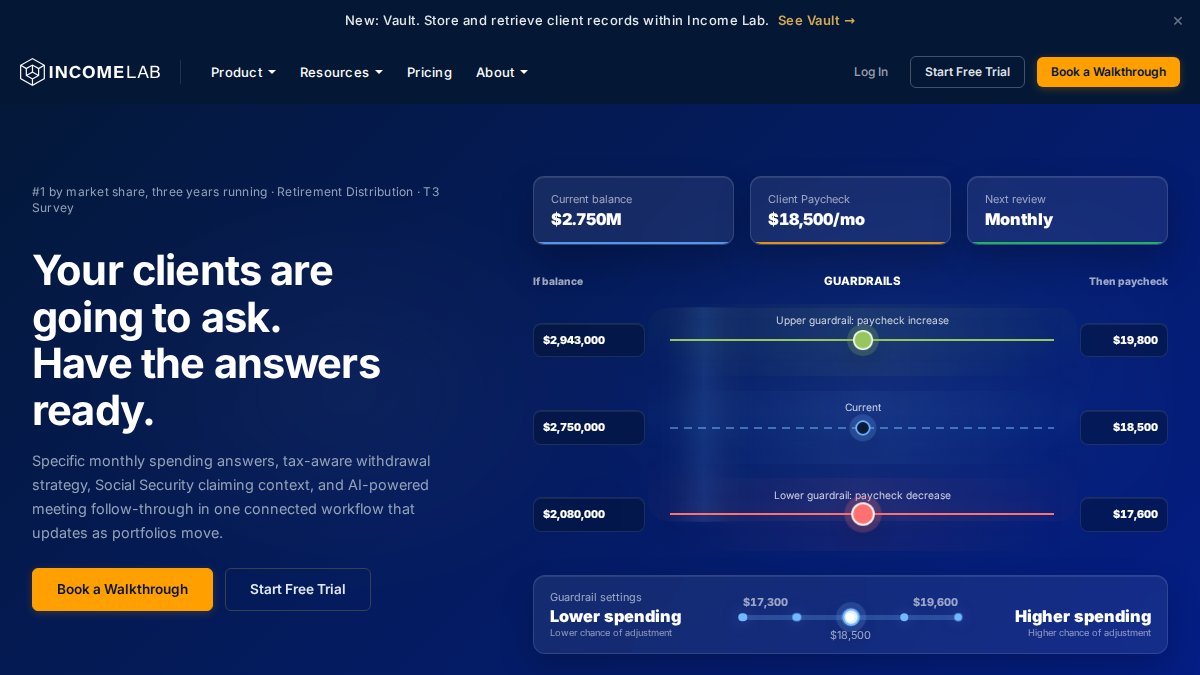
Income Lab Pro | Retirement income specialists | Dynamic distribution and legacy projections | Cloud-based | Not published publicly |
Monarch Money | Households tracking family wealth | Collaborative multi-user planning | Cloud-based | Published subscription tiers |
Total Cost of Ownership: The Number Most Comparisons Hide
Subscription price is the smallest line item in a legacy planning budget. A realistic TCO model includes:
- Subscription or license fees, recurring, and often tiered by number of users or accounts.
- Onboarding and data migration, pulling historical accounts, cost basis, and beneficiary records into the new system. This is frequently billed hourly.
- Training time, every user who logs in weekly needs to learn the interface. Multiply hours by the blended hourly value of that person's time.
- API and integration fees, connecting to custodians, CRMs, or tax software sometimes carries per-connection or per-record charges.
- Advisor or CPA review fees, if the software output feeds into a human review, that cost belongs in the model.
- Exit cost, exporting your data if you switch later. Ask about this before you sign, not after.
Security, Compliance, and Data Handling
Legacy plans contain some of the most sensitive data a family holds: account numbers, Social Security numbers, beneficiary designations, and estate documents. Before adopting any platform, confirm:
- Encryption in transit and at rest
- Role-based access controls so an adult child sees only what they should
- Multi-factor authentication for every user
- A documented data retention and deletion policy
- Whether the vendor undergoes independent security audits
Top Picks for Estate Planning Software for Families
Estate planning software for families has to solve a social problem as much as a technical one. Someone has to keep the plan current, and everyone affected needs to see it.
RightCapital: Visual Estate and Retirement Planning
RightCapital gives advisors a planning platform that turns estate scenarios into visuals clients can actually follow. Its integrated tax modules and cash flow tools sit in one place, which cuts down on the spreadsheet juggling that slows estate conversations.
Monarch Money: Household Collaboration for Family Wealth
Monarch Money is the strongest option here for families who want to track investments, budgets, and shared goals in one dashboard. Its multi-user design means a spouse or adult child can log in and see the same picture.
Origin: Software Plus Access to Certified Planners
Origin pairs automated net worth and cash flow tracking with access to certified financial planners. That combination suits people who want software convenience but still want a human to review the plan.
Tax-Efficient Legacy Strategies: Software That Finds the Savings
Tax-efficient legacy strategies live or die on projections. A single-year tax estimate tells you almost nothing about a 20-year distribution plan.
Holistiplan: Tax Return Analysis in Minutes
Holistiplan reads tax returns and flags planning opportunities automatically. For advisors, that turns a multi-hour manual review into a fast, repeatable process with a clear client-facing summary.
Income Lab Pro and Bloomberg Tax: Distribution and Multi-Year Projections
Income Lab Pro focuses on retirement income: dynamic spending, tax-smart withdrawal sequencing, and projections that show the legacy impact of each choice. It suits advisors managing high-net-worth distribution plans.
Schedule A Time With Our Firm →
Financial Planning for Multi-Generational Wealth: Tools That Scale
Financial planning for multi-generational wealth adds a layer most software ignores: the transfer itself. Intergenerational wealth transfer tools need to show what each generation receives, when, and at what tax cost, and they need to do it across households that may not share an advisor, a state, or even a country.
What Intergenerational Transfer Tools Actually Need to Model
A plan that works for two spouses rarely fits four households across three generations. The features that separate a real multi-generational tool from a family budgeting app:
- Per-beneficiary projections, not just a total estate value, but what each heir receives under different scenarios.
- Trust and entity structures, irrevocable trusts, LLCs, and family partnerships each change the tax picture. The software should let you model them side by side.
- Generation-skipping and gift-tax scenarios, showing the cost of transferring now versus later.
- Required minimum distribution sequencing, inherited retirement accounts follow different rules depending on the beneficiary's relationship and age.
- Multi-user permissions, a trustee, a spouse, and an adult child should each see a different view of the same plan.
- Document vault, wills, trust documents, powers of attorney, and beneficiary forms stored where every authorized user can find them.
Migrating Off Legacy Systems: A Practical Roadmap
If "legacy" means the older on-premise software your firm or family office still runs, the migration is the hard part, and almost no comparison article covers it. Here is the sequence that works:
- Inventory the data. List every account, beneficiary record, cost-basis entry, and document currently stored in the old system. Flag anything that exists only in paper form.
- Map fields to the new system. Cost basis, acquisition dates, and beneficiary designations rarely transfer cleanly. Identify mismatches before you export.
- Run a parallel period. Keep the old system live for one full reporting cycle while the new one runs alongside it. Reconcile the two before you cut over.
- Migrate in stages, not all at once. Accounts first, then documents, then historical reporting. A staged cutover limits the blast radius if something breaks.
- Verify with a third party. Have your CPA or an independent reviewer spot-check the migrated data against source statements.
- Archive, don't delete. Keep a read-only copy of the old system for at least one full tax year in case you need to trace a historical figure.
Scalability Signals to Look For
- Support for an unlimited or high number of linked accounts
- Role-based permissions that scale from two users to twenty
- API access so the platform can grow with your custodian and CRM stack
- Cloud-based architecture, so adding a household does not require new hardware
- A vendor roadmap that shows active development, not maintenance-only releases
A tool that cannot add a third generation without a manual workaround is not a multi-generational tool. It is a two-person tool with extra steps.
How to Evaluate Legacy Planning Software: A Decision Framework
Start with the user, not the feature list. Software chosen for the wrong user gets abandoned within a year, no matter how capable it is.
Use this framework to narrow the field:
- Identify who will log in weekly: you, your spouse, your advisor, or all three
- Confirm the tool models taxes across multiple years, not just one
- Check whether estate and beneficiary data can be stored and updated
- Verify data security practices and how account credentials are handled
- Ask how onboarding works and how long setup typically takes
- Estimate total cost of ownership: subscription, setup time, and advisor fees
Conclusion
The hardest part of legacy planning is not choosing software. It is keeping the plan current as accounts, tax rules, and family circumstances change.
Frequently Asked Questions
What features should I look for in legacy-focused financial planning software?
Prioritize tools that model multi-year tax scenarios, project retirement income and estate impact, and support document sharing through a client portal. Look for integration with the systems your advisor already uses, plus data security and compliance controls that meet regulatory requirements. If you work with a firm like Gorra Financial Group, ask which platform they use and whether you get direct access to your plan.
How does financial planning software help with estate and legacy goals?
Legacy planning software turns scattered accounts into one view of your net worth, then projects how withdrawals, taxes, and gifts affect what heirs receive. Estate planning software for families adds beneficiary tracking and scenario modeling so you can compare outcomes before committing to a strategy. The software does not replace legal documents like wills or trusts, but it shows whether your current plan holds up under different market and tax assumptions.
Is professional financial planning software better than DIY tools for legacy building?
DIY tools like Monarch Money and Simplifi handle budgeting, cash flow, and basic goal tracking well. They fall short on advanced estate modeling, tax-efficient withdrawal sequencing, and multi-generational projections. If your estate is straightforward and your income is mostly W-2, a DIY tool may be enough. If you own a business, hold significant assets, or want tax-efficient legacy strategies, advisor-grade platforms such as RightCapital, Holistiplan, or Income Lab Pro give deeper analysis. Many people combine both: software for daily tracking and a firm for strategy.
How do I integrate tax planning into my legacy strategy using software?
Start with a tool that reads your actual tax return, such as Holistiplan, which uses OCR to flag planning opportunities. Then model multi-year scenarios in Bloomberg Tax Income Tax Planner or Corvee to compare Roth conversions, charitable giving, and withdrawal timing. Review results with a CPA before acting. Gorra Financial Group keeps CPAs and accounting services in house, so tax projections and financial planning stay coordinated rather than passing between separate firms.
What is the role of a financial advisor in using legacy planning software?
Advisors interpret what the software produces. A projection showing a 90% success rate means little without context about market assumptions, health care costs, and your spending flexibility. Advisors also handle the parts software cannot: estate document coordination, beneficiary reviews, insurance analysis, and family conversations about financial planning for multi-generational wealth. Ask any firm how often they review your plan and who actually runs the software on your behalf.